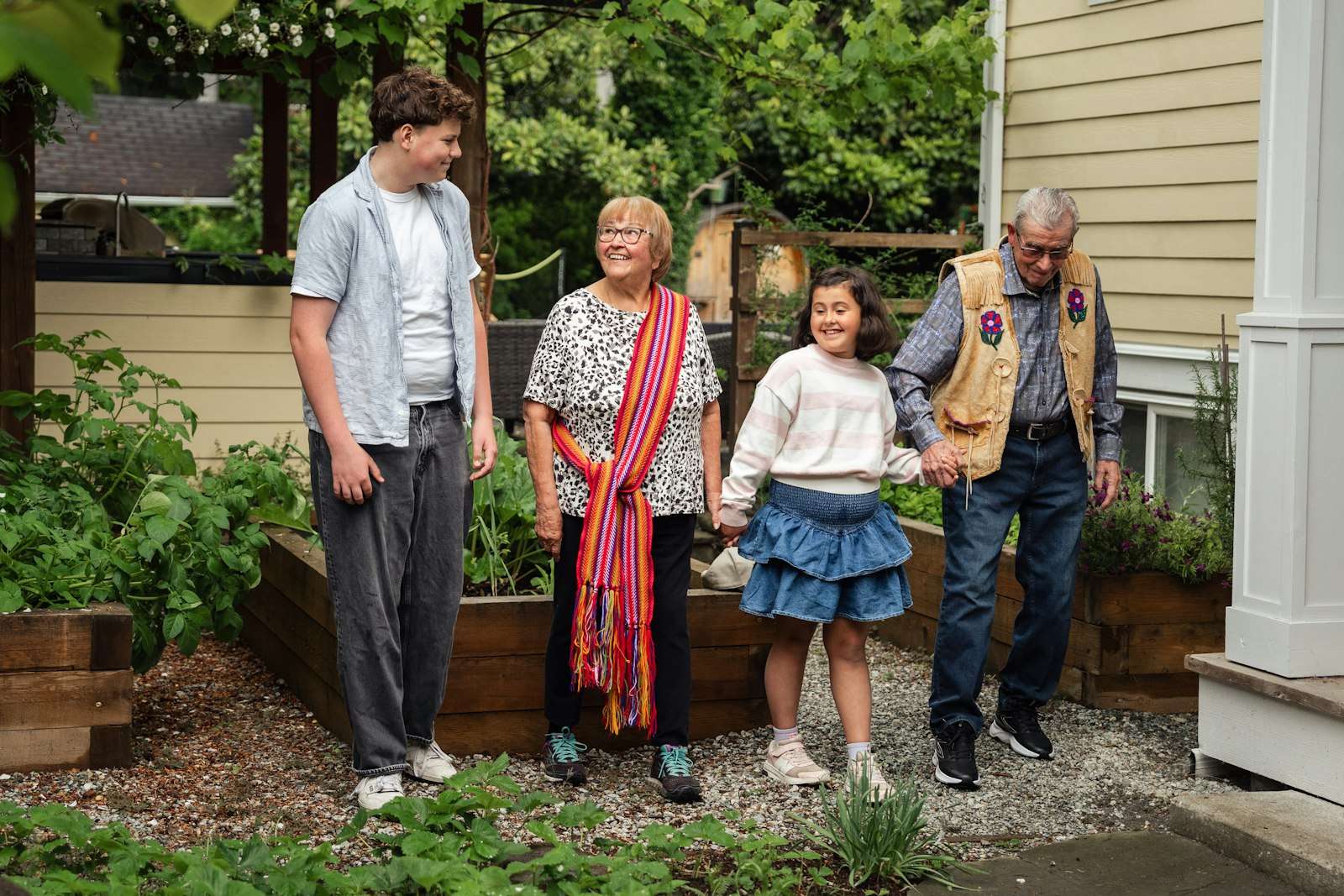
Meet Mark and Lisa: a blended family
In a blended family, one or both partners have children from an earlier relationship. Getting blended family wills right matters, because a simple will can accidentally cut children out.

To show how, we will follow one family through two outcomes. Mark and Lisa are an illustrative example, but their situation is very common.
- Mark has two children from his first marriage, Emma and Josh.
- Lisa has a son from her first marriage, Ben.
- They marry and buy a £450,000 home jointly, with Mark putting in more of the deposit.
They both want the same thing: whoever survives can stay in the home for life, and then all three children share what is left.
Scenario one: simple wills leaving everything to each other
Mark and Lisa each leave everything to the other, then to all three children equally. It feels right, and at first it works.
Mark dies first
Because the house is owned as "joint tenants", Mark's share passes straight to Lisa, whatever his will says. His savings go to her too. Lisa now owns everything.
Life moves on
Four years later, Lisa remarries, which cancels her existing will. Her new will leaves everything to her new husband and then to Ben. She is entitled to do this, as it is all hers.
The result
- Emma and Josh inherit nothing, including the money their father put into the house.
- A court claim would be costly and uncertain.
Scenario two: wills with a life interest trust
This time, Mark and Lisa take advice. Their wills include a life interest trust, which lets the survivor stay in the home while protecting each share for their own children.
- They change how they own the house to "tenants in common", so each owns a separate share they can leave in their will.
- Each will puts that share into a trust. Lisa can live in the home for life, or move somewhere smaller. When she dies, Mark's share goes to Emma and Josh. Lisa's will does the same for Ben.
- They choose trustees carefully. Mark names Lisa and his brother, so Lisa has a say and someone independent looks out for Emma and Josh.
The result
Lisa stays secure in her home. If she remarries, Mark's share stays protected in the trust. When she dies, every child inherits as Mark and Lisa intended.
Other things blended families should check
The home is usually the biggest issue, but every asset can pass in a different way.
- Joint bank accounts pass straight to the other account holder.
- Pensions follow the form you gave your provider, so make sure it does not still name a former partner.
- Stepchildren get nothing without a will unless you name them.
- Guardians for children under 18 should be named in your will.
- Lasting powers of attorney decide who acts for you if you cannot, whether your partner, your children or both.
Some couples ask about "mutual wills", a binding agreement not to change your will. They are rarely used because they are inflexible. A life interest trust usually gives the same protection more simply.
Lessons from Mark and Lisa's story
Blended families need wills written for blended families, so your partner is looked after and every child is treated as you intend.
| Simple wills | Wills with a trust | |
|---|---|---|
| Surviving partner | Owns everything | Can live in the home for life |
| If they remarry | Mark's share can pass on | Mark's share stays protected |
| Mark's children | Inherit nothing | Inherit their father's share |
| Lisa's son | Inherits everything | Inherits his mother's share |
When to get advice
- You or your partner have children from a previous relationship.
- You are getting married, which cancels an existing will.
- You have separated and your will still names your former partner.
How PJH Estate Planning can help
PJH Estate Planning can write wills for blended families that look after your partner and protect every child, including life interest trusts and changing how you own your home. Find out what you could face in your current situation with our free Estate Health Check: 10 quick questions that show any gaps in your plans. You can visit our offices, or we can visit you at home.
Sources
Mark, Lisa and their children are an illustrative example. General information for England and Wales as at October 2026. Not legal advice.